









Introduction
accurately known as Basque separatists, represent a long-standing political and cultural movement rooted in identity, language, and regional autonomy.Basqueserpartists At its core, this movement seeks independence or greater self-rule for the Basque people living in Basque Country. While the topic may seem complex, understanding it becomes easier when we explore its history, motivations, and modern developments step by step.
Moreover, the rise of basqueserpartists reflects deeper global trends where regions demand cultural preservation and political autonomy. Therefore, this article breaks down everything clearly, using simple language, strong transitions, and SEO-optimized structure to help you fully understand the topic.
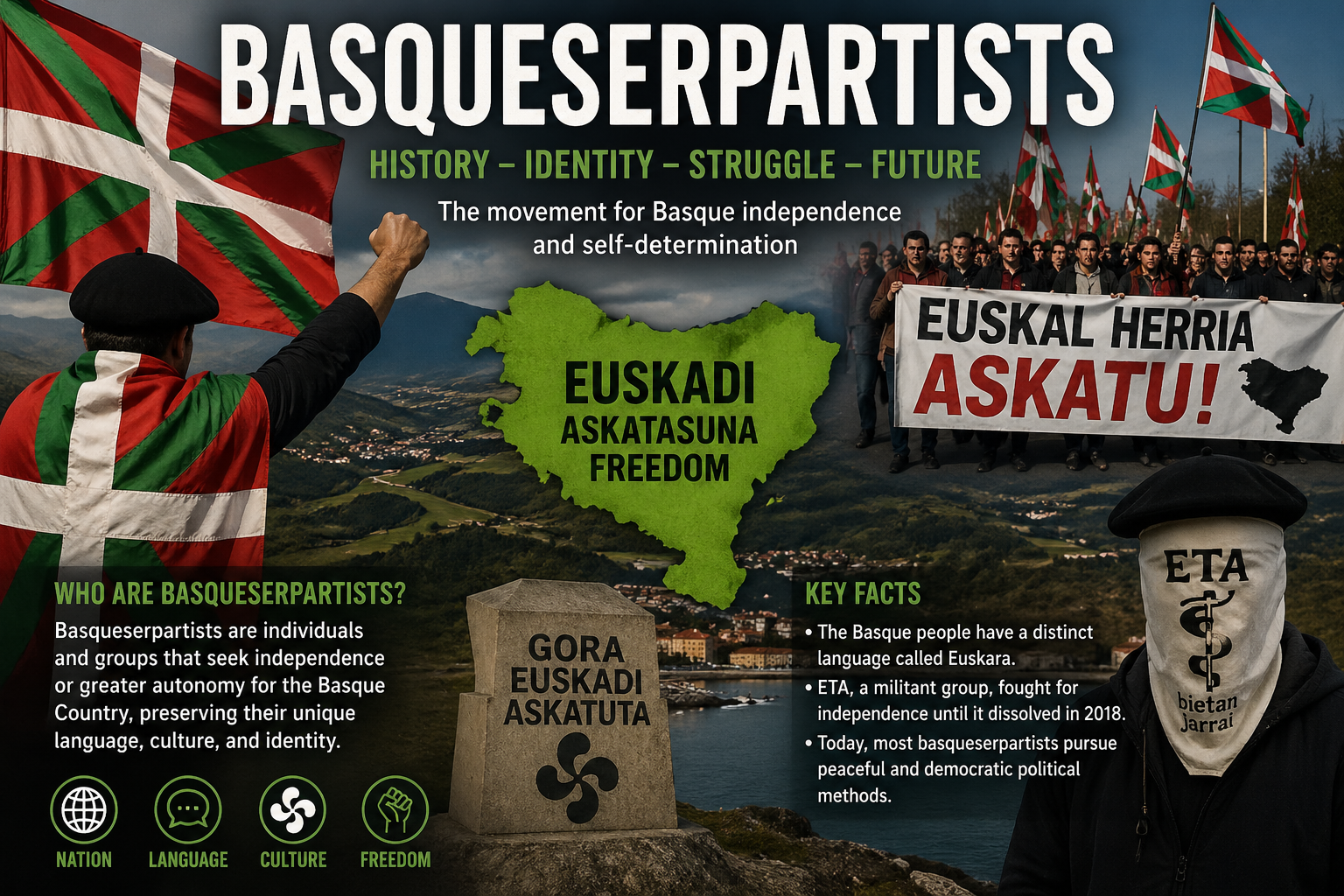
What Are Basqueserpartists?
Basqueserpartists are individuals or groups who advocate for independence or expanded autonomy for the Basque region. In addition, they emphasize preserving their unique culture, traditions, and especially the Basque language known as Euskara.
Unlike many other regions, the Basque identity stands out due to its ancient origins. As a result, separatists often argue that their culture predates modern European nations. Consequently, their demand for independence is not only political but also deeply cultural and historical.
Furthermore, basqueserpartists are not a single unified group. Instead, they include political parties, activists, and, historically, militant organizations. However, their methods and goals can vary significantly.
Historical Background of Basque Separatism
Early Identity and Cultural Roots
The roots of basqueserpartists go back centuries. The Basque people have lived in the region for thousands of years, maintaining their own customs and language. Because of this, they developed a strong sense of identity early on.
During medieval times, the Basques enjoyed a degree of self-governance. However, over time, central governments in Spain and France began to reduce this autonomy. As a result, dissatisfaction gradually increased.
Rise of Nationalism
In the 19th century, nationalism spread across Europe. Similarly, Basque nationalism emerged as a response to industrialization and cultural assimilation. At this point, basqueserpartists started organizing politically.
Moreover, leaders promoted the idea of a distinct Basque nation. Therefore, they emphasized language revival, cultural pride, and political independence.
The Role of ETA in Basque Separatism
Formation and Objectives
One of the most well-known aspects of basqueserpartists is the group ETA, which stands for Euskadi Ta Askatasuna. Founded in 1959, ETA initially aimed to promote Basque culture. However, over time, it turned into an armed separatist organization.
As a result, ETA carried out violent campaigns seeking independence. While some supporters viewed them as freedom fighters, many others condemned their actions.
Impact on Society
ETA’s activities had a profound impact on both the Basque region and Spain as a whole. Consequently, the conflict led to political instability, security concerns, and public fear.
However, in 2011, ETA declared a permanent ceasefire. Later, in 2018, the group officially dissolved. Therefore, modern basqueserpartists have largely shifted toward peaceful political methods.
Political Movements and Modern Basqueserpartists
Peaceful Advocacy
Today, most basqueserpartists focus on democratic processes. For example, political parties advocate for independence through elections and public campaigns.
In addition, these groups work within legal frameworks. Therefore, they aim to gain support through dialogue rather than conflict.
Autonomy vs Independence
Interestingly, not all basqueserpartists demand full independence. Instead, some support increased autonomy within Spain. As a result, the movement includes a wide range of perspectives.
Moreover, the Basque region already enjoys significant self-governance. Consequently, debates continue about whether full independence is necessary.
Cultural Importance Behind Basqueserpartists
Language Preservation
One of the strongest motivations for basqueserpartists is protecting Euskara. Unlike most European languages, it has no known relation to others. Therefore, it holds immense cultural value.
Furthermore, language is seen as a key part of identity. As a result, preserving it becomes a central goal of the movement.
Traditions and Heritage
In addition to language, basqueserpartists emphasize traditions such as festivals, cuisine, and sports. These cultural elements strengthen community bonds.
Consequently, maintaining these traditions helps reinforce the idea of a distinct Basque nation.
Economic Factors Influencing Basqueserpartists
Regional Wealth
The Basque Country is one of the wealthiest regions in Spain. Because of this, some basqueserpartists argue that they could thrive independently.
Moreover, economic strength provides confidence in self-governance. Therefore, financial independence becomes a key argument.
Tax Autonomy
Interestingly, the region already has unique tax privileges. As a result, it collects and manages its own taxes to a large extent.
However, debates continue about whether full economic independence would bring more benefits or risks.
Global Perspective on Separatist Movements
Basqueserpartists are not alone. Similar movements exist worldwide, such as in Scotland and Catalonia. Therefore, the Basque case fits into a broader global trend.
Moreover, globalization has increased awareness of cultural identity. As a result, more regions demand recognition and autonomy.
However, each movement has unique historical and political contexts. Therefore, comparisons should be made carefully.
Challenges Facing Basqueserpartists Today
Political Divisions
One major challenge is internal division. Since basqueserpartists have different goals, unity becomes difficult.
Moreover, disagreements about methods and priorities can weaken the movement. Therefore, achieving consensus remains a challenge.
Public Opinion
Public support plays a crucial role. While some people strongly support independence, others prefer staying within Spain.
As a result, basqueserpartists must continuously engage with the public to maintain relevance.
Future of Basqueserpartists
Peaceful Progress
The future of basqueserpartists appears more peaceful than in the past. Since violent groups have dissolved, political dialogue has become the main approach.
Moreover, democratic processes provide a stable path forward. Therefore, change is likely to happen gradually.
Possible Outcomes
Several outcomes are possible. For example, the region could gain more autonomy. Alternatively, independence movements may grow stronger.
However, any major change will depend on political negotiations and public support.
FAQs
What does basqueserpartists mean?
Basqueserpartists refers to people who support independence or greater autonomy for the Basque region.
Is the Basque Country independent?
No, the Basque Country is part of Spain and France, although it has significant autonomy within Spain.
What was ETA?
ETA was a militant separatist group that sought Basque independence but dissolved in 2018.
Do all Basques support separatism?
No, opinions vary widely. Some support independence, while others prefer remaining part of Spain.
Is Basque language important?
Yes, Euskara is central to Basque identity and a major reason behind the separatist movement.
Conclusion
Basqueserpartists represent more than just a political movement. Instead, they reflect a deep connection to culture, language, and identity. Over time, the movement has evolved from conflict to peaceful advocacy. As a result, it now focuses on democratic processes and public engagement.
Moreover, the future of Basque separatism will depend on political dialogue, economic factors, and public opinion. Therefore, staying informed about this topic helps you understand broader global trends.