








Introduction
The story of Kirsty Muir in Tears After Missing Winter Olympics Medal by 0.41 Points became one of the most emotional moments of the Winter Olympics. Millions of fans watched as the talented Scottish freestyle skier came within touching distance of an Olympic medal, only to miss the podium by the smallest of margins. Her determination, courage, and resilience captured hearts across the world, proving that sport is often about far more than winning medals.
For Team GB supporters, the result brought mixed emotions. While there was disappointment that Britain’s first snow medal remained out of reach, there was also enormous pride in Muir’s remarkable journey. The young skier delivered a fearless performance under immense pressure and reminded everyone why she is regarded as one of the brightest stars in Olympic freestyle skiing. Her unforgettable display in the Women’s slopestyle final showed that she belongs among the world’s elite athletes.
Who Is Kirsty Muir?
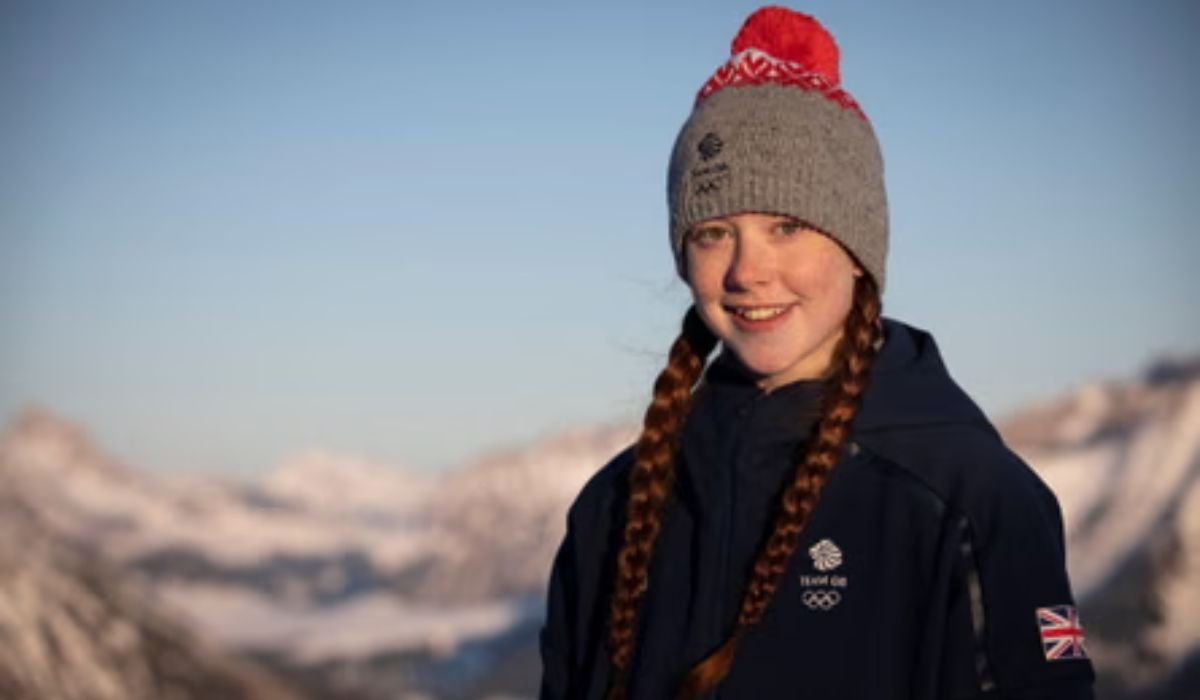
Kirsty Muir has become one of the biggest names in British freestyle skiing thanks to her fearless style and remarkable consistency. Born in Aberdeen, Scotland, she discovered skiing at a local dry slope long before she competed on the world’s biggest stages. Today, the Aberdeen skier represents Team GB with pride and has inspired a new generation of young athletes to dream about success in Winter Games skiing.
Unlike many elite skiers who grow up near snow-covered mountains, Muir developed her skills on artificial slopes. That unusual path shaped her determination and technical ability. As a Scottish skier, she quickly progressed through junior competitions before becoming one of Britain’s strongest Team GB medal hopes. Her success proves that talent, dedication, and smart coaching can overcome geographical challenges.
Early Life and Background
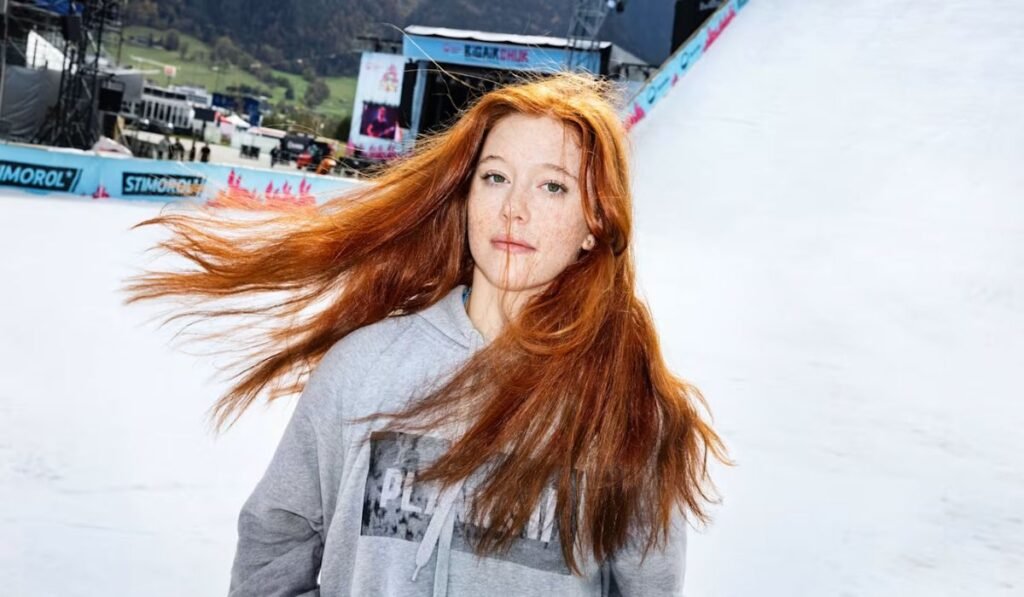
Kirsty Muir was born on May 18, 2004, in Aberdeen, Scotland. She learned to ski at the Garthdee Alpine Sports Centre, where countless hours of practice laid the foundation for her future career. While many young athletes spend weekends playing traditional sports, Muir preferred mastering jumps, spins, and balance.
Her family recognized her passion early and supported her journey through local competitions before she entered international events. Those experiences helped build confidence while introducing her to the demanding world of competitive freestyle skiing. Every competition became another opportunity to improve rather than simply chase trophies.
Journey Into Professional Freestyle Skiing
Muir’s rapid rise surprised many observers. As a teenager, she began competing against experienced international athletes and consistently impressed judges with her creativity and technical skill. Her fearless attitude became one of her biggest strengths, especially during high-pressure moments.
Her career reached another level after joining the British national program. Strong performances at World Cup events, combined with becoming an X Games champion, established her among the sport’s elite. These achievements also strengthened Britain’s ambitions in Team GB skiing, where she quickly became one of the country’s brightest Olympic prospects.
Kirsty Muir Quick Bio
| Information | Details |
|---|---|
| Full Name | Kirsty Muir |
| Birth Date | May 18, 2004 |
| Age | 21 (Winter Olympics 2026) |
| Nationality | British |
| Birthplace | Aberdeen, Scotland |
| Sport | Freestyle Skiing |
| Discipline | Slopestyle & Big Air |
| Olympic Debut | Beijing 2022 |
| Team | Team GB |
| Major Achievement | X Games Gold Medal |
What Happened in the Winter Olympics Slopestyle Final?
Few sporting events create pressure like an Olympic final. The Winter Olympics slopestyle final in Livigno featured twelve of the world’s finest freestyle skiers, each chasing a place on the Olympic podium. Every athlete received three runs, with only the highest score counting toward the final standings. This format encouraged competitors to attempt difficult combinations while balancing risk against execution.
The contest delivered everything fans expected. Spectacular aerial tricks, dramatic falls, and incredibly close scores kept viewers guessing until the final athlete crossed the finish line. The Olympic ski competition highlighted why freestyle skiing has become one of the fastest-growing disciplines in Olympic snow sports.
Overview of the Women’s Slopestyle Final
The competition took place at the Livigno Olympic venue, where bright sunshine later gave way to cloudier conditions. Athletes navigated a course filled with ski rails, jumps, technical features, and large kickers designed to test every aspect of freestyle skiing. Each section demanded flawless timing because even a tiny mistake could ruin an otherwise excellent run.
Fans witnessed one of the strongest fields in Olympic history. Olympic champions, world champions, and rising stars competed together in a thrilling Women’s freeski slopestyle contest. Every skier knew that one clean performance could change the medal race completely.
How the Competition Unfolded
The opening round immediately demonstrated the difficulty of the course. Several competitors struggled with landings, while others sacrificed consistency in pursuit of higher scores. Kirsty Muir’s opening attempt showed promise, yet a heavy landing limited her Kirsty Muir score, leaving significant work ahead.
During the second run, the leaderboard changed repeatedly as athletes introduced increasingly difficult combinations. The excitement reached another level in the final round, where competitors attempted spectacular Olympic ski tricks such as the Double cork 1260, Double cork 1440, and 1080 jump. These breathtaking performances transformed the event into one of the most memorable Freestyle skiing competition finals in recent Olympic history.
Why the Final Was So Competitive
Several factors made this final unusually close. The world’s best skiers entered in outstanding form, and most had already won medals at World Championships, World Cups, or the X Games. As a result, separating performances became increasingly difficult for the Olympic skiing judges.
The official Slopestyle scoring system rewarded athletes who combined technical difficulty, originality, clean execution, and confident landings. Those strict Olympic judging criteria meant that even the smallest imbalance or imperfect landing could cost valuable points. That scoring philosophy ultimately played a decisive role in the dramatic Bronze medal battle, leaving fans discussing the razor-thin margins long after the event concluded.
Kirsty Muir Misses Olympic Medal by Just 0.41 Points
The Kirsty Muir missed Olympic medal story quickly became one of the defining moments of the Games. Missing a medal by only 0.41 points is an incredibly narrow margin in elite sport. That tiny gap highlighted just how competitive modern Olympic freestyle skiing has become. Every grab, landing, and spin mattered during this unforgettable Olympic ski final.
Although the result ended in a Fourth-place finish, Muir demonstrated remarkable composure throughout the competition. Her performance showed why she remains one of Britain’s brightest prospects in Winter Games skiing. Many experts agreed that her technical ability matched the world’s best, even if the scoreboard did not reflect it on this occasion.
First Run Analysis
Kirsty Muir began cautiously, knowing the opening run would establish momentum. She linked the rail section well and carried good speed through the course. Unfortunately, a slightly unstable landing after a difficult jump reduced her overall score. The judges rewarded her creativity yet deducted points for execution.
Her opening Kirsty Muir score of 37.15 left her outside the leading group. While disappointing, the result was far from decisive because only the highest of three runs counted. That rule encouraged athletes to increase the difficulty level during later attempts rather than settle for safe routines.
Second Run Performance
The second run displayed greater confidence. Muir attacked the course with improved rhythm and cleaner transitions across the ski rails. Her landings looked steadier, and she appeared more relaxed as she approached the larger jumps. The judges responded by awarding a significantly higher mark.
Her score improved to 63.01, moving her several places up the standings. However, the leading athletes had already produced exceptional performances. That meant Muir entered the final attempt knowing she needed the Best Olympic run of her career to challenge for the Olympic podium.
Final Run Breakdown
Everything depended on the final descent. Muir attacked the course with determination and completed several impressive Olympic ski tricks. She executed a stylish 1080 jump before adding one of freestyle skiing’s most demanding combinations. Her confidence returned at exactly the right moment.
She also landed a spectacular sequence that included advanced rotations similar to those performed by the event favorites. Her outstanding Kirsty Muir final run earned 76.05 points. It was enough to lift her into fourth place, yet Canada’s score remained just 0.41 points higher. That tiny difference created one of the closest finishes in recent Olympic skiing results.
Why Every Point Mattered
Freestyle skiing rewards precision more than perfection. A slight loss of balance, a softer landing, or reduced amplitude can influence the judges’ decisions. During this Slopestyle skiing event, every athlete pushed the limits because conservative skiing rarely wins Olympic medals.
The Slopestyle scoring process also values originality alongside technical execution. Muir delivered excellent difficulty, yet a few small imperfections separated her from bronze. Those tiny details ultimately shaped the Olympic performance analysis, reminding fans that elite sport often comes down to fractions rather than whole numbers.
| Athlete | Country | Best Score | Result |
|---|---|---|---|
| Mathilde Gremaud | Switzerland | 86.96 | Gold |
| Eileen Gu | China | 86.58 | Silver |
| Megan Oldham | Canada | 76.46 | Bronze |
| Kirsty Muir | Great Britain | 76.05 | Fourth |
Kirsty Muir’s Emotional Reaction After the Competition
Few moments in Olympic history have illustrated the emotional side of sport quite like Kirsty Muir in tears after the final scores appeared. She had invested years of training, recovered from serious injuries, and entered the Games believing she could win a medal. Falling short by less than half a point made the disappointment even more difficult to accept.
Despite the sadness, Muir handled the situation with remarkable honesty and maturity. Her response earned admiration from athletes, coaches, and fans across the world. The Olympic athlete reaction became almost as memorable as the competition itself because it reflected the dedication required to compete at the highest level.
Her Tearful Interview
During her Kirsty Muir emotional interview, she admitted that she had given everything she could on every run. She explained that the result hurt because she knew how close she had come to standing on the podium. Even through visible emotion, she remained proud of fighting until the final jump.
Her comments quickly spread through Olympic sports news outlets worldwide. Rather than blaming officials or conditions, she accepted the outcome with dignity. That attitude strengthened her reputation as a respected Team GB athlete, earning praise from commentators and former Olympic champions alike.
“I put it all out there. It just wasn’t working for me today, but I’ll learn from it and come back stronger.” — Kirsty Muir
Family Support
One of the most touching moments came after the event when Muir embraced her family. They reminded her that her value was never measured by medals alone. Their encouragement reflected the strong support system that has guided her career from the dry slopes of Aberdeen to the Olympic stage.
Her coaches shared similar feelings. They praised her determination and highlighted the enormous progress she has made since recovering from a serious knee injury. Their confidence suggested that this Olympic disappointment could become an important step toward an even greater Olympic comeback.
Fans React Around the World
Support poured in from every corner of the skiing community. Social media filled with messages praising her courage, resilience, and sportsmanship. Many supporters described her performance as one of the most inspiring moments of the Games despite the absence of a medal.
The response also reflected growing excitement about Team GB Winter Olympics results and Britain’s improving position in freestyle skiing. Many experts believe Muir’s display has inspired more young athletes to enter Winter sports competition, ensuring her influence extends well beyond one dramatic afternoon in Italy.
Slopestyle Results and Final Medal Winners
The women’s event produced a memorable finish with elite athletes delivering extraordinary performances. The final standings reflected outstanding consistency, technical excellence, and fearless skiing throughout the day. Every medal winner earned their position after completing difficult combinations under enormous Olympic pressure.
The competition also demonstrated why Women’s skiing final events continue attracting global audiences. Spectacular jumps, technical innovation, and razor-thin margins created an unforgettable contest that showcased the highest standard of modern freestyle skiing.
Final Medal Standings
| Medal | Athlete | Country | Score |
|---|---|---|---|
| Gold | Mathilde Gremaud gold medal | Switzerland | 86.96 |
| Silver | Eileen Gu silver medal | China | 86.58 |
| Bronze | Megan Oldham bronze medal | Canada | 76.46 |
| Fourth | Kirsty Muir | Great Britain | 76.05 |
Gold Medal – Mathilde Gremaud
Mathilde Gremaud defended her Olympic title with exceptional confidence. Her performance featured clean landings, remarkable amplitude, and highly technical rotations. She became the standout performer of the Olympic freestyle ski event, proving once again why she remains one of the sport’s greatest competitors.
One highlight included a beautifully executed Double cork 1260, combined with outstanding control from start to finish. Her performance set the benchmark for every competitor and deservedly secured first place in the Olympic medal standings.
Silver Medal – Eileen Gu
Eileen Gu once again demonstrated why she is considered one of freestyle skiing’s biggest stars. Her powerful skiing combined elegance with technical brilliance, producing one of the highest-scoring runs of the competition.
Her routine included difficult combinations and excellent execution across the Olympic ski course. Although she narrowly missed gold, her consistency confirmed her place among the world’s leading Olympic medal contenders.
Bronze Medal – Megan Oldham
Megan Oldham faced enormous pressure during the closing stages. After earlier mistakes, she delivered enough quality to remain ahead of Muir by the narrowest margin. That score secured Canada’s place on the podium after an intense Bronze medal battle.
Oldham’s medal-winning routine balanced ambition with control. While others attempted even greater difficulty, her cleaner execution proved decisive under the Ski slopestyle judges‘ evaluation. Her bronze medal became one of the defining stories of the Winter Olympic highlights.
Top Competitors in the Women’s Slopestyle Event
The women’s freestyle skiing final featured an extraordinary lineup of athletes who pushed the boundaries of modern skiing. Every finalist entered the event with international success, making the competition one of the strongest in Olympic history. The level of talent proved why Women’s freeski slopestyle continues to grow as one of the most exciting disciplines in Olympic snow sports.
Each competitor brought a unique style to the course. Some relied on technical precision, while others focused on massive jumps and creative combinations. Their different approaches produced unforgettable performances and gave fans a thrilling Freestyle skiing competition from start to finish.
Mathilde Gremaud – Switzerland’s Dominant Champion
Mathilde Gremaud entered the event as the defending Olympic champion and one of the favorites to win another title. She displayed incredible confidence from her opening run and attacked every feature with remarkable precision. Her flawless execution separated her from the rest of the field.
Gremaud’s routine included difficult rail combinations and massive aerial maneuvers. Her clean landings and stylish execution impressed the Olympic skiing judges, helping her secure the Mathilde Gremaud gold medal with the highest score of the competition. She once again proved why she ranks among the greatest freestyle skiers in the world.
Eileen Gu – The Global Freestyle Superstar
Eileen Gu carried enormous expectations into the event after winning multiple Olympic and World Championship medals. She balanced technical difficulty with graceful movement, creating one of the smoothest performances of the day. Her confidence remained obvious throughout every section of the course.
Her spectacular combination of advanced spins and perfectly controlled landings earned the Eileen Gu silver medal. Gu continued to demonstrate why she remains one of the biggest names in Olympic freestyle skiing and one of the sport’s most influential athletes.
Megan Oldham – Canada’s Medal Winner
Megan Oldham faced intense pressure after an inconsistent second run. Rather than chasing unnecessary risk, she focused on completing a clean and controlled final performance. That smart strategy ultimately earned her the Megan Oldham bronze medal.
Oldham combined excellent rail work with difficult aerial rotations. Although her score remained only slightly ahead of Muir’s, her consistency across the course proved enough to secure a place on the podium in this memorable Olympic medal race.
Rising Stars Who Impressed
Several younger competitors also attracted attention despite missing the medals. Athletes such as Avery Krumme, Liu Mengting, Lara Wolf, and Anni Karava displayed outstanding talent throughout the competition. Their performances showed how quickly women’s freestyle skiing continues to evolve.
These emerging stars attempted increasingly difficult Olympic ski tricks, demonstrating that future Olympic events will become even more competitive. Their fearless approach guarantees an exciting future for international freestyle skiing.
Top Four Final Results
| Position | Athlete | Country | Best Score |
|---|---|---|---|
| Gold | Mathilde Gremaud | Switzerland | 86.96 |
| Silver | Eileen Gu | China | 86.58 |
| Bronze | Megan Oldham | Canada | 76.46 |
| Fourth | Kirsty Muir | Great Britain | 76.05 |
How Olympic Slopestyle Is Judged
Many fans wonder why one skier receives a higher score than another despite similar tricks. The answer lies in the detailed Slopestyle scoring system, where judges examine every movement from the first rail to the final landing. Tiny differences often separate medal winners from the rest of the field.
Understanding the judging process makes competitions even more enjoyable to watch. Once you know what officials evaluate, you begin noticing details that casual viewers often miss. Every jump, spin, and landing contributes to the athlete’s final score.
Competition Format
The Olympic slopestyle final allows each athlete three runs. Only the highest score counts toward the final standings, encouraging competitors to take calculated risks instead of skiing conservatively.
This format creates constant drama because athletes who struggle early still have opportunities to recover. Kirsty Muir demonstrated this perfectly by improving significantly during her final attempt after difficult opening runs.
What the Judges Look For
The official Olympic judging criteria reward skiers who combine technical difficulty with creativity, flow, execution, and clean landings. Judges also consider the variety of tricks throughout the course rather than rewarding repetitive performances.
Athletes earn higher marks when they perform advanced rotations, difficult grabs, and smooth transitions while maintaining speed. Strong use of the ski rails and precise execution across the Olympic ski course remain equally important.
Key Judging Factors
| Judging Category | Importance |
|---|---|
| Difficulty | Very High |
| Execution | Very High |
| Landing Quality | Very High |
| Creativity | High |
| Style | High |
| Flow | Medium to High |
| Rail Technique | High |
| Variety of Tricks | High |
Why Tiny Mistakes Matter
One slightly unstable landing can reduce an athlete’s overall score. Even a brief hand touch or loss of balance may result in deductions that become decisive in a close contest. That reality explains why elite skiers constantly practice consistency alongside difficult tricks.
During this Winter Olympics Italy event, several competitors produced spectacular performances but lost valuable points through minor execution errors. Those small deductions ultimately determined the final Olympic final results.
Kirsty Muir’s Career Highlights and Biggest Achievements
Although she narrowly missed an Olympic medal, Kirsty Muir has already built an impressive career at a remarkably young age. Her achievements reflect years of determination, disciplined training, and fearless skiing. She continues to establish herself as one of Britain’s most successful freestyle athletes.
Her journey also demonstrates resilience. Serious injuries interrupted her progress, yet she returned stronger than ever. That determination has earned widespread respect throughout the international skiing community and strengthened her reputation as one of the sport’s brightest talents.
Early International Success
Muir impressed coaches from an early age by competing against older athletes without showing fear. She collected strong results at junior competitions before moving onto the World Cup circuit, where she quickly proved she could compete with the world’s best.
Her rapid improvement reflected countless hours of technical training and physical preparation. Each season brought greater consistency, helping improve her Olympic ski rankings before the Winter Games.
Becoming an X Games Champion
Winning the X Games represented one of the biggest milestones of Muir’s career. She produced an exceptional performance against many of the same athletes she later faced at the Olympics. That victory established her as a genuine medal contender.
As an X Games champion, she gained valuable confidence before arriving at the Winter Olympics. Many analysts believed that success would help her challenge the favorites during the Women’s freestyle ski final.
Olympic Career Timeline
| Year | Event | Result |
|---|---|---|
| 2022 | Beijing Winter Olympics | 8th Place |
| 2026 | Livigno Winter Olympics | 4th Place |
Career Achievements at a Glance
| Achievement | Details |
|---|---|
| Olympic Appearances | 2 |
| X Games Gold | 1 |
| World Cup Victories | Multiple |
| Primary Events | Slopestyle & Big Air |
| National Team | Team GB |
Overcoming Injury and Returning Stronger
A serious knee injury in 2023 forced Muir away from competition for several months. Rehabilitation demanded patience and determination, testing both her physical strength and mental resilience. Many athletes struggle after major injuries, yet she returned with renewed confidence.
Her successful recovery became one of the most inspiring stories in Team GB skiing. Instead of allowing the setback to define her career, she used it as motivation. That resilience helped shape the outstanding Kirsty Muir Olympic performance that nearly delivered Britain’s long-awaited Winter Olympic medal.
What This Result Means for Kirsty Muir’s Future
Missing an Olympic medal by just 0.41 points could have discouraged many athletes. Instead, Kirsty Muir has every reason to believe her best years are still ahead. At only 21 years old during the 2026 Winter Olympics, she has already proven she can compete with the world’s finest freestyle skiers. Her narrow defeat is not the end of her Olympic story. It is the beginning of a new chapter filled with opportunity.
Many former Olympic champions have experienced setbacks before standing on the podium. Muir’s performance showed that she possesses the technical skills, mental toughness, and competitive spirit needed to become a future Olympic medalist. With continued development, she could become one of the most successful British athletes in Olympic freestyle skiing history.
The Big Air Competition Offers Another Opportunity
The Winter Olympics were not over after the slopestyle event. Muir still had the Big Air competition, another discipline that rewards explosive jumps and advanced rotations. Unlike slopestyle, Big Air focuses on one massive jump, allowing athletes to showcase their biggest tricks without navigating rails and multiple features.
Her experience as an X Games champion gives her confidence in high-pressure situations. She has already demonstrated the ability to perform difficult rotations against the world’s strongest competitors. Many experts believed she remained one of the leading Olympic medal contenders despite the disappointment of the slopestyle event.
Building Toward Future Winter Olympics
Every Olympic cycle gives athletes valuable experience. Competing against the world’s best helps skiers understand what separates medal winners from the rest of the field. For Muir, this event provided important lessons about consistency, risk management, and execution under pressure.
The next Winter Olympics offer another realistic opportunity to compete for gold. By then, she will have gained additional World Cup experience, refined her trick combinations, and developed even greater confidence. Her impressive Kirsty Muir Olympic performance in Livigno suggests she has all the tools needed to become a future champion.
Areas That Can Make the Difference
| Development Area | Potential Benefit |
|---|---|
| Cleaner Landings | Higher execution scores |
| Greater Trick Variety | Improved creativity marks |
| Better Rail Precision | Stronger overall runs |
| Increased Competition Experience | Greater consistency |
| Mental Preparation | Improved performance under pressure |
Why Experts Continue to Back Kirsty Muir
Coaches and analysts remain optimistic because Muir combines natural talent with relentless determination. She consistently attempts difficult tricks while maintaining excellent control, qualities shared by many Olympic champions. Her willingness to learn from setbacks has become one of her greatest strengths.
The international skiing community also recognizes her potential. Every season she continues to improve technically while becoming more comfortable competing under intense pressure. If she maintains this trajectory, future Olympic ski competition events could see her standing proudly on the Olympic podium.
Read More: Brian Aherne Biography: Early Life, Career, Movies, Wife, Net Worth & More
Conclusion
The story of Kirsty Muir in Tears After Missing Winter Olympics Medal by 0.41 Points reminds us why the Olympic Games create unforgettable memories. Victory and disappointment often exist side by side. Although Muir narrowly missed the podium, she displayed remarkable courage, technical brilliance, and resilience against the strongest field in women’s freestyle skiing. Her performance demonstrated that she belongs among the world’s elite competitors.
While the scoreboard recorded a fourth-place finish, many fans saw something much greater. They witnessed an athlete who refused to surrender, fought until her final jump, and accepted defeat with dignity. Those qualities cannot be measured by points alone. They define true champions.
Looking ahead, Kirsty Muir’s future remains exceptionally bright. With her experience, determination, and continuous improvement, she has every opportunity to transform this Olympic heartbreak into a remarkable Olympic comeback. As she prepares for future World Cups, X Games, and Olympic events, one thing is certain: the journey of this talented Scottish skier is far from over. The next chapter could be even more inspiring than the last.
Kirsty Muir Quick Career Summary
| Category | Information |
|---|---|
| Full Name | Kirsty Muir |
| Nationality | British |
| Birthplace | Aberdeen, Scotland |
| Sport | Freestyle Skiing |
| Main Events | Slopestyle & Big Air |
| Olympic Appearances | 2022, 2026 |
| Best Olympic Finish | 4th Place |
| X Games Gold | Yes |
| World Cup Wins | Multiple |
Frequently Asked Questions About Kirsty Muir and the Winter Olympics
Many fans discovered Kirsty Muir during the Winter Olympics and wanted to learn more about her career. The questions below answer the most common searches while providing useful information about her achievements, Olympic journey, and future ambitions.
These answers also explain freestyle skiing for readers who may be watching the sport for the first time. Understanding the event makes it easier to appreciate just how remarkable Muir’s performance truly was.
Why did Kirsty Muir miss the Olympic medal?
Kirsty Muir narrowly missed the bronze medal after scoring 76.05 points. Canada’s Megan Oldham scored 76.46, leaving a difference of only 0.41 points. Small deductions during the Slopestyle scoring process ultimately decided the result.
What was Kirsty Muir’s final score?
Her best score was 76.05 during her outstanding Kirsty Muir final run. That performance moved her from lower down the leaderboard into fourth place.
Who won the women’s slopestyle gold medal?
Switzerland’s Mathilde Gremaud won gold with a score of 86.96. China’s Eileen Gu earned silver, while Canada’s Megan Oldham secured bronze.
What sport does Kirsty Muir compete in?
She competes in freestyle skiing, specializing in slopestyle and Big Air events. Both disciplines are among the most exciting competitions in Olympic snow sports.
Where is Kirsty Muir from?
Kirsty Muir was born in Aberdeen, Scotland. The Aberdeen skier learned the sport on a dry slope before becoming one of Britain’s top freestyle athletes.
Has Kirsty Muir won an Olympic medal?
No. As of the 2026 Winter Olympics, she has not won an Olympic medal. Her best Olympic result is a heartbreaking fourth-place finish after missing bronze by only 0.41 points.
What is slopestyle skiing?
Slopestyle is a freestyle skiing discipline where athletes perform tricks over rails, boxes, and jumps. Judges evaluate difficulty, style, execution, creativity, and landing quality according to official Olympic skiing rules.
Why is Kirsty Muir considered one of Team GB’s brightest stars?
She has won World Cup events, claimed X Games gold, and consistently challenged the world’s best freestyle skiers despite her young age. Her achievements have made her a key figure in Team GB skiing.